
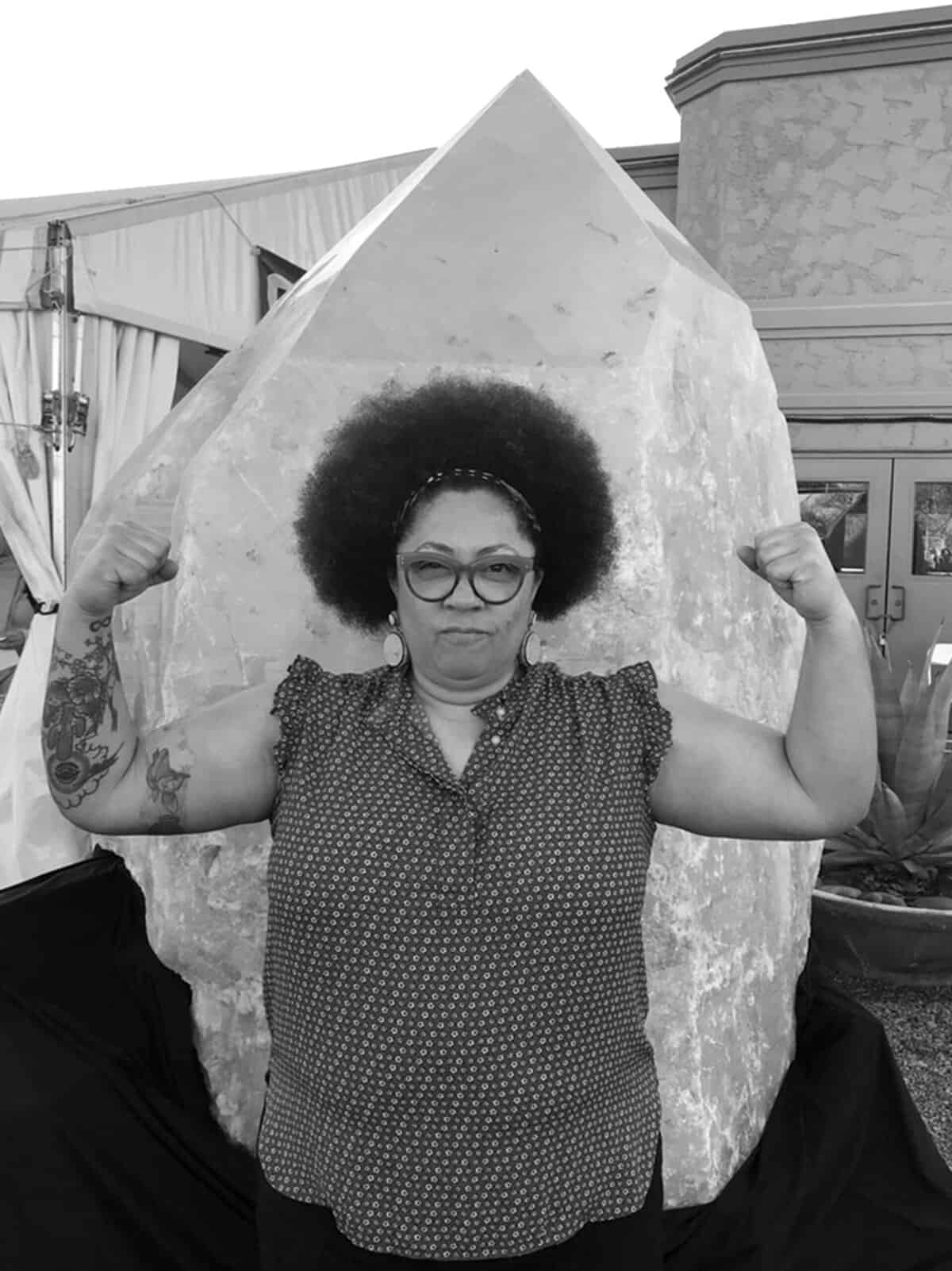
Meet our Creative-in-Residence: Tanya Crane
1.Can you tell us a bit about your background and how you became interested in your field?
I started making jewelry in the late 90’s, first beadwork, then wire, then upon moving to Seattle I started classes in Metalwork at Pratt Fine Arts Center. There I learned jewelry and metal fabrication as well as many other skills. Years later I attended SUNY New Paltz for my undergraduate degree in Metal, then on to University of Wisconsin-Madison for my graduate degree in Jewelry and Metal. The biggest influence for me was being able to go to galleries in Seattle that specialized in “Art Jewelry.” Specifically, a gallery called Facèré Jewelry Art Gallery. They showcased artists like Jessica Calderwood and Jan Smith, both whom illustrated enamel surfaces with overglaze paints and graphite. I was attracted to their large scale and fascinating images of everyday life. While in school, I learned from another enamel artist, one of the most renowned in the field of enamel, Jamie Bennett. His work is very painterly and influenced by the gardens of Monet.
2. What inspires your work and where do you draw your creative ideas from?
My work is inspired by African beadwork, and architecture, specifically the Ghanan homes in Tiébélé have also inspired my mark making. I enjoy the repetitive meditative process of removing the top layer of enamel to reveal the color beneath. I also work in series often prompted by a topic. For instance, I have a solo show up right now at the Racine Art Museum in Wisconsin called Embodied Histories: Exploring the Legacy of African Jewelry. This work was inspired by their collection of African slave jewelry.
3. Can you describe a project or piece you’re particularly proud of and why it stands out to you?
My graduate showpiece was a necklace of five large 3″ discs made of copper and enamel. They formed a circle roughly 8 inches in diameter and held on a gold plated chain. This necklace, titled ‘Big Pimpin’ was purchased by the Museum of Fine Arts-Boston. This achievement was pivotal in my career as a jewelry artist. The production work that I make was inspired by this piece.
4. What do you hope to achieve or explore during your residency with us?
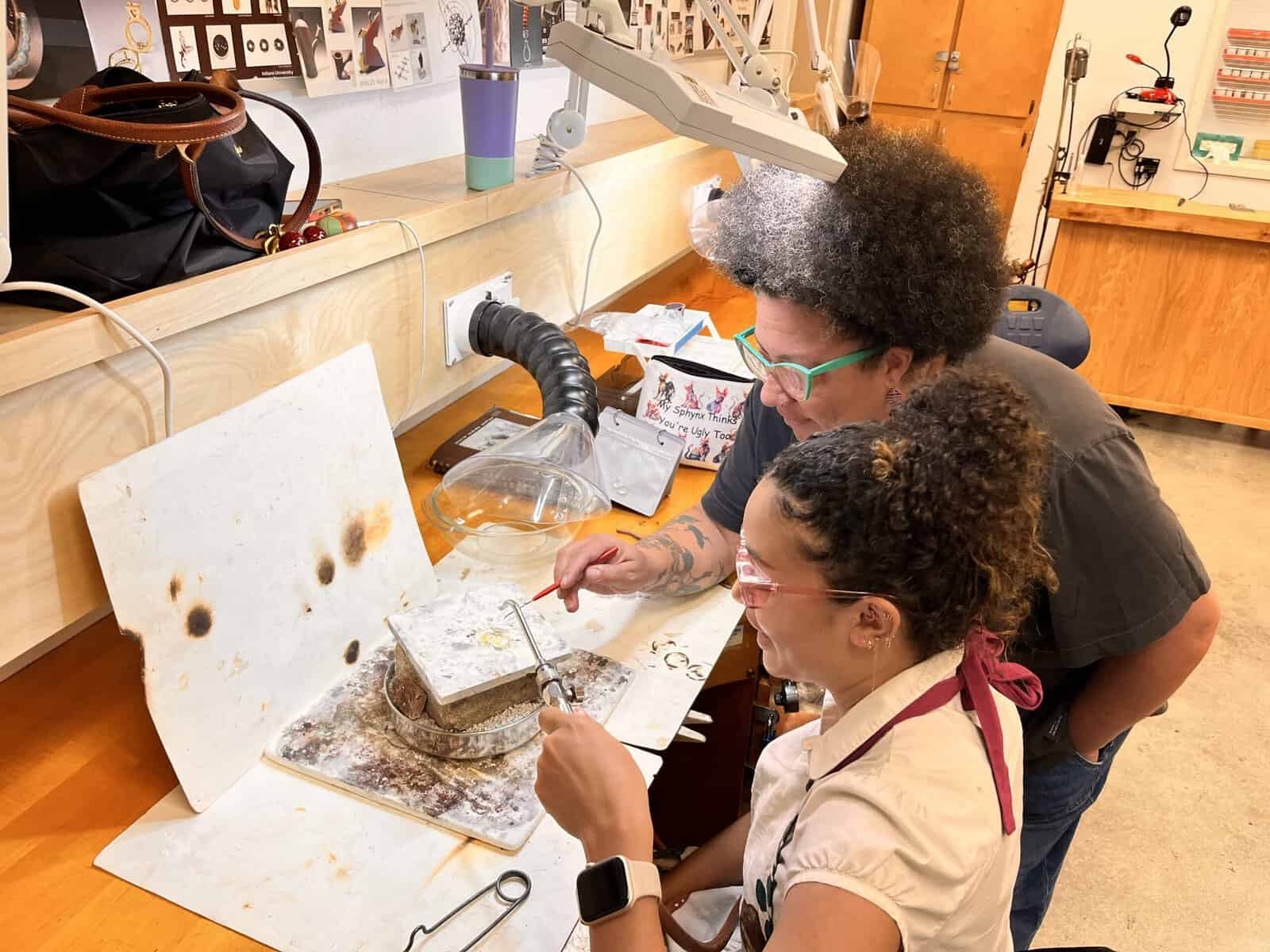
At Studio One Eleven, I plan to focus on stone-setting and fabrication. I intend to collaborate with the architects and R&D team to create more structure-based forms. I also plan to host a short version of Radical Jewelry Makeover, a community based mining project intended to reuse and remake jewelry that people don’t want anymore.
5. How do you see your work impacting or contributing to our office culture and community?
I see my work contributing to your office culture and community by creating meaningful connections between disciplines and people. Jewelry is one of the most outward-facing forms of expression, often carrying personal narratives, values, and identity. In a similar way, architecture communicates meaning through space, material, and form. By bringing these two practices into conversation, I aim to bridge communities that may not traditionally intersect.
My approach encourages a deeper awareness of how objects and environments shape human experience. I am interested in fostering dialogue, collaboration, and reflection both within the office and with the broader community through work that is thoughtful, materially driven, and conceptually grounded. I believe this cross-disciplinary perspective can enrich creative culture, inspire new ways of thinking, and elevate both practices by highlighting their shared capacity to communicate meaning and connect people.
6. What do you think is the role of art and creativity in the workplace?
That’s a great question. I don’t really see a separation between work, art, and creativity, they’re all ways of thinking and problem-solving. Some people express ideas visually, others through writing or systems, but it’s all creative.
In the workplace, creativity helps people think differently, collaborate better, and feel more connected to what they’re doing. I think giving people space to express ideas and be creative leads to stronger work and a more engaging, human-centered environment.
www.tanyamoniquejewelry.com
Contact Tanya Crane at crane.tanya@gmail.com