


Menu
About
Project Details
Location
Practice Theme
What We Did
Size
Studio One Eleven transformed a broad vision outlined in the Rancho’s 1999 Master Plan into an integrated landscape and infrastructure strategy that protects the site’s historic character while preparing it for a more resilient future. The result is the first stormwater improvement project in the United States to implement such an extensive stormwater capture and reuse system within a property recognized as a local, state, and national historic landmark. Rather than introducing visible engineering infrastructure that would compete with the historic landscape, the project seamlessly weaves sustainable water management into the visitor experience, allowing environmental performance and cultural preservation to coexist.
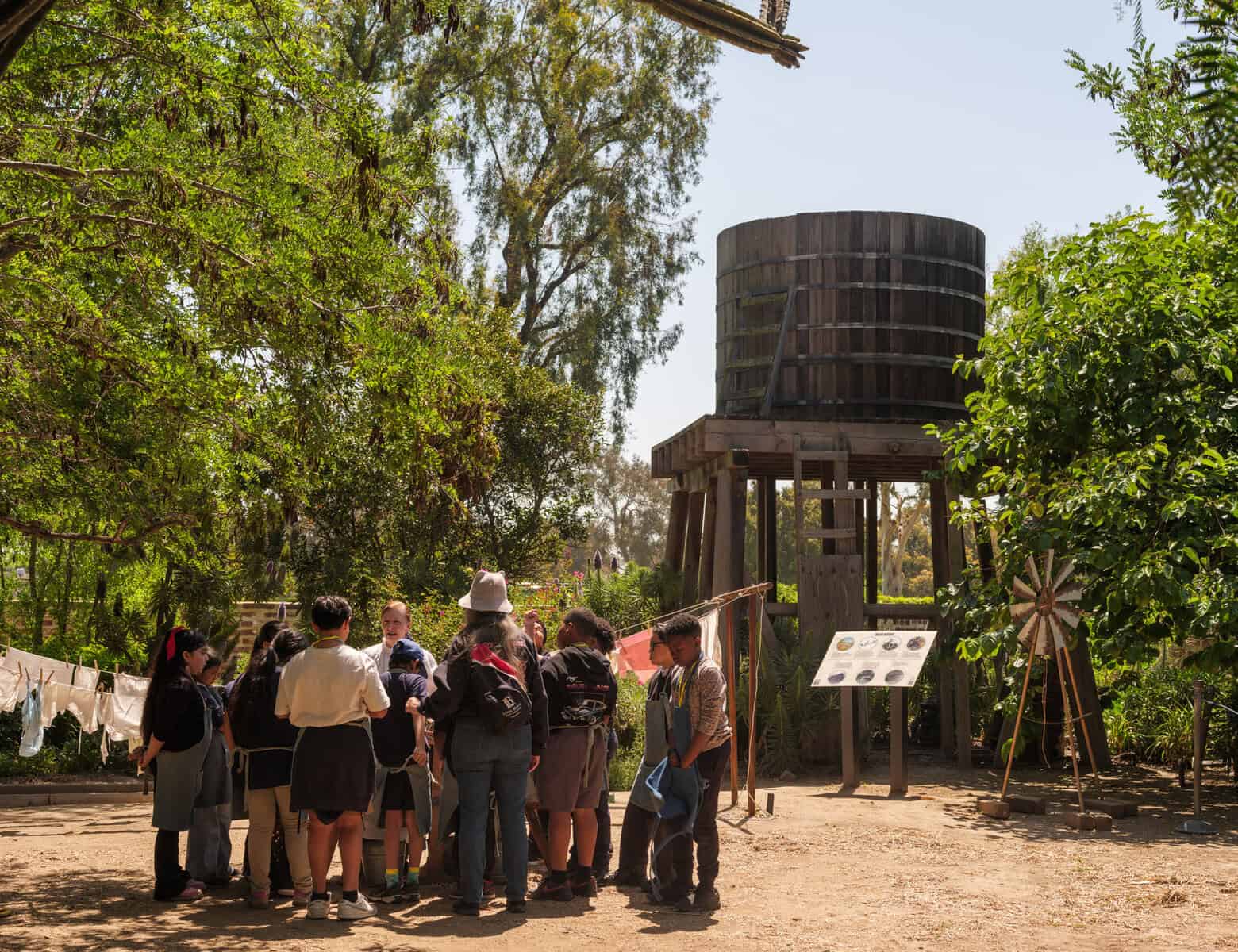
Water has always defined Rancho Los Cerritos. Perched atop the gentle hills of Bixby Knolls, the Rancho has relied on innovative water stewardship for thousands of years – from Indigenous land management practices and natural drainage patterns to agricultural irrigation systems that sustained the historic ranch throughout Southern California’s recurring drought cycles. Today, that legacy continues through Looking Back to Advance Forward, a groundbreaking project that reimagines historic water stewardship using contemporary green infrastructure while preserving one of California’s most significant cultural landscapes.
Capturing Water for the Future
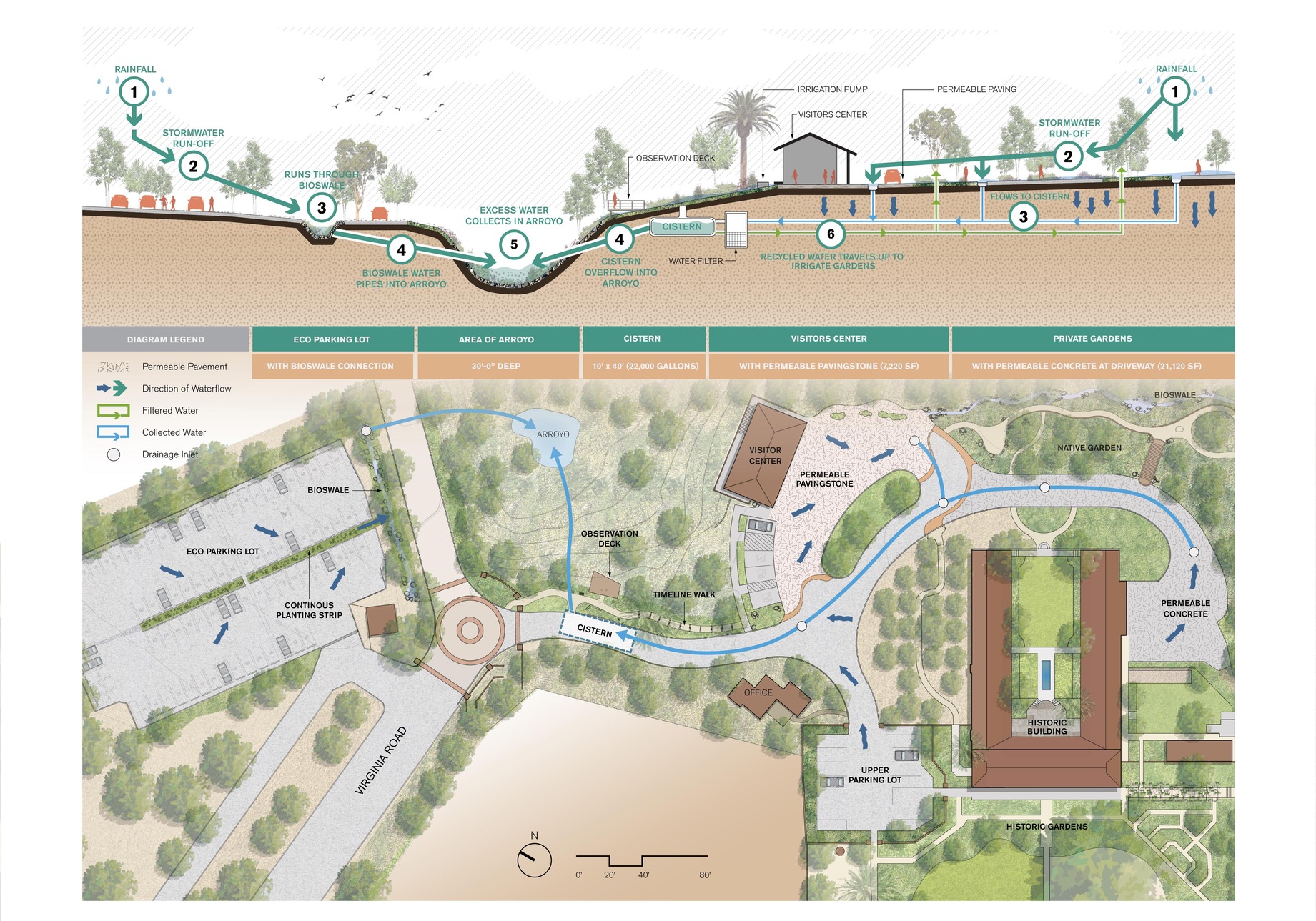
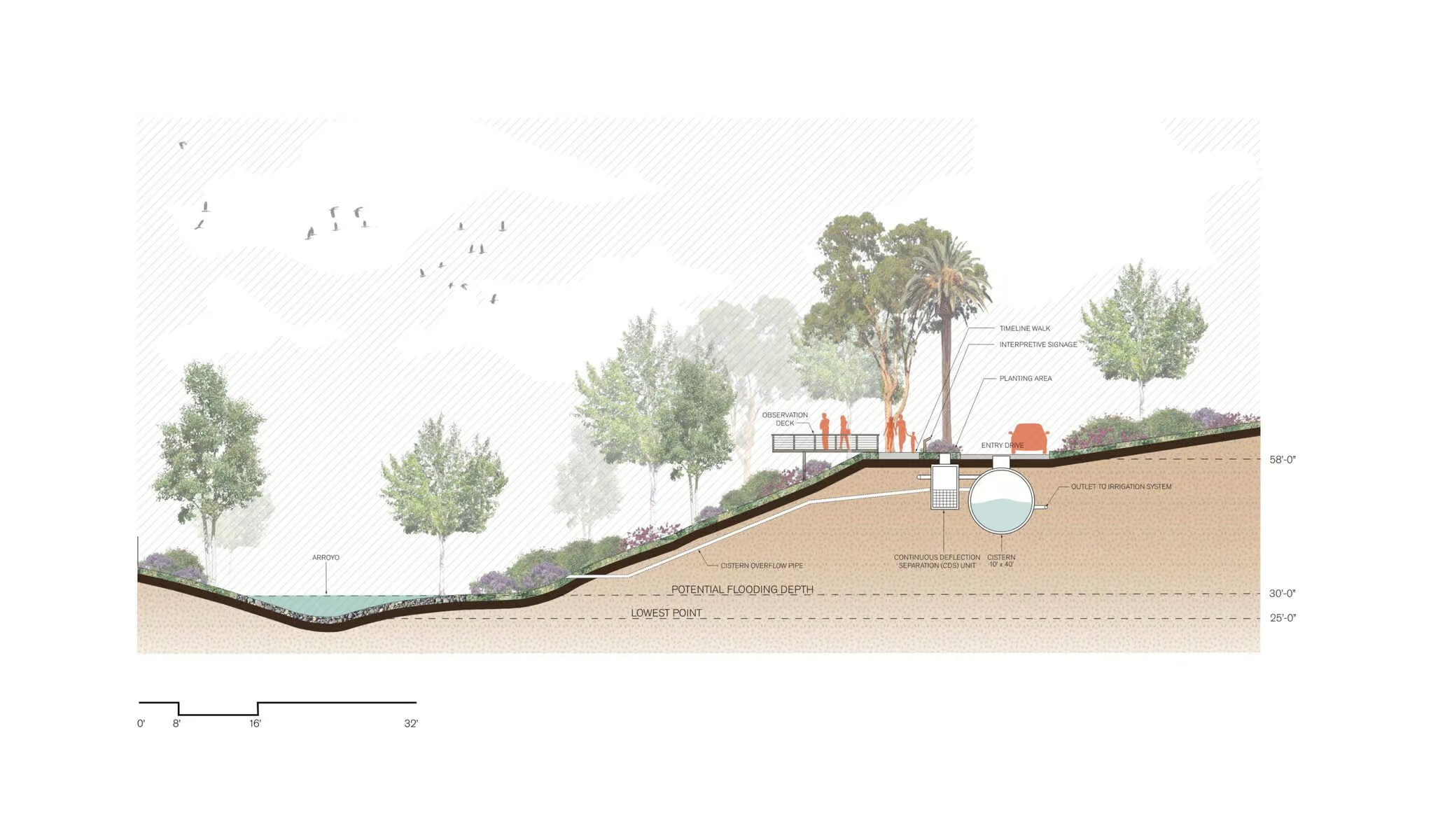
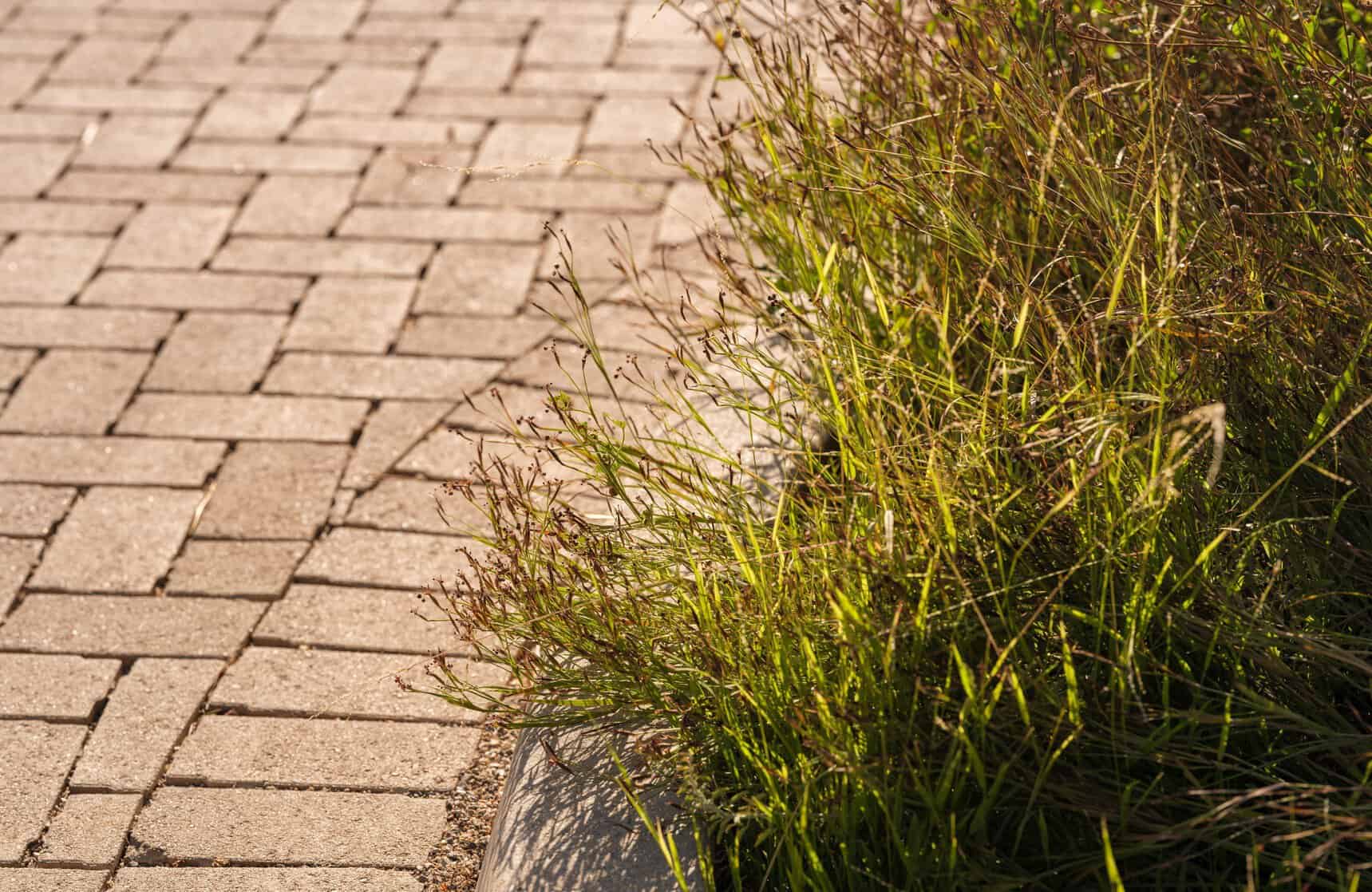
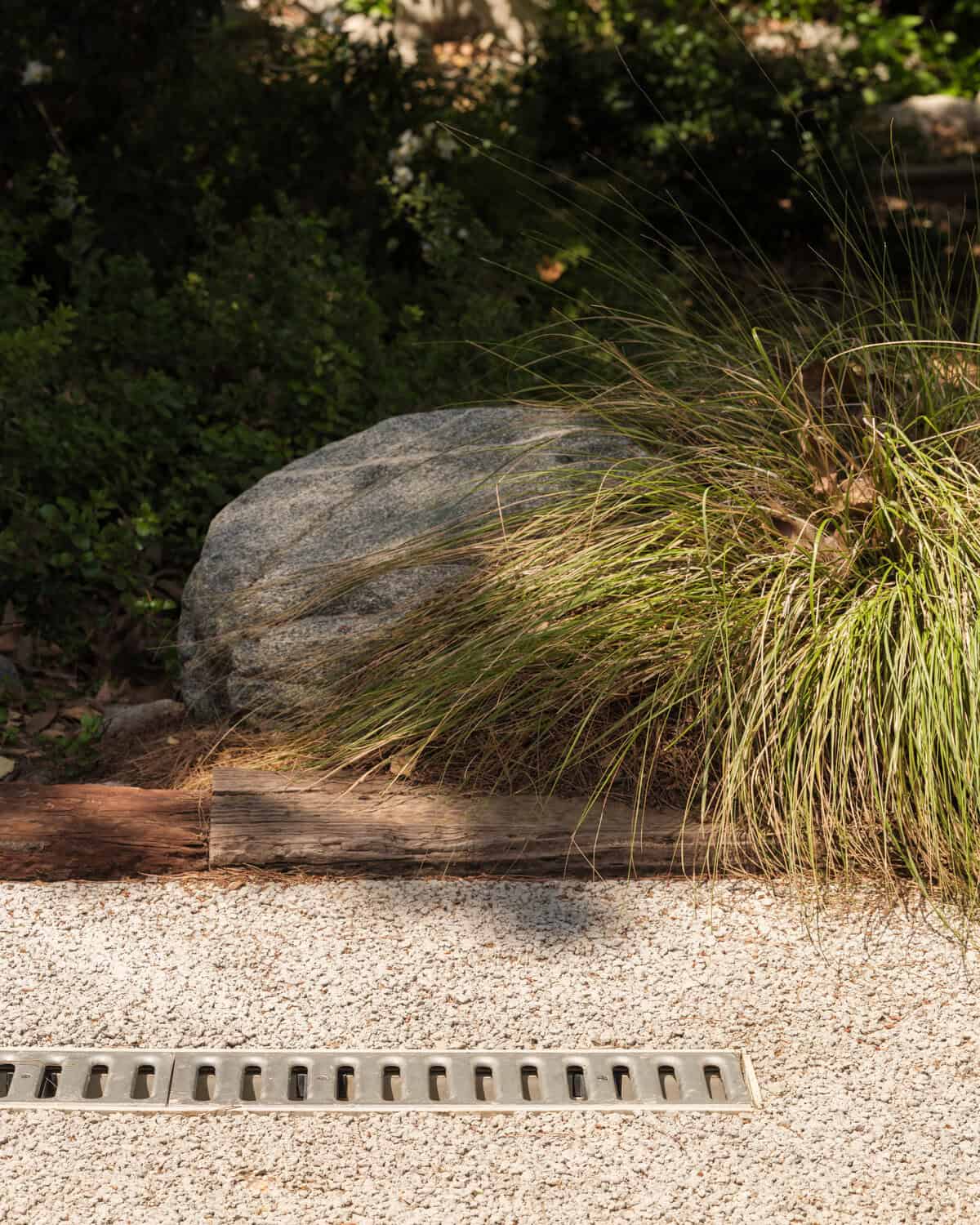
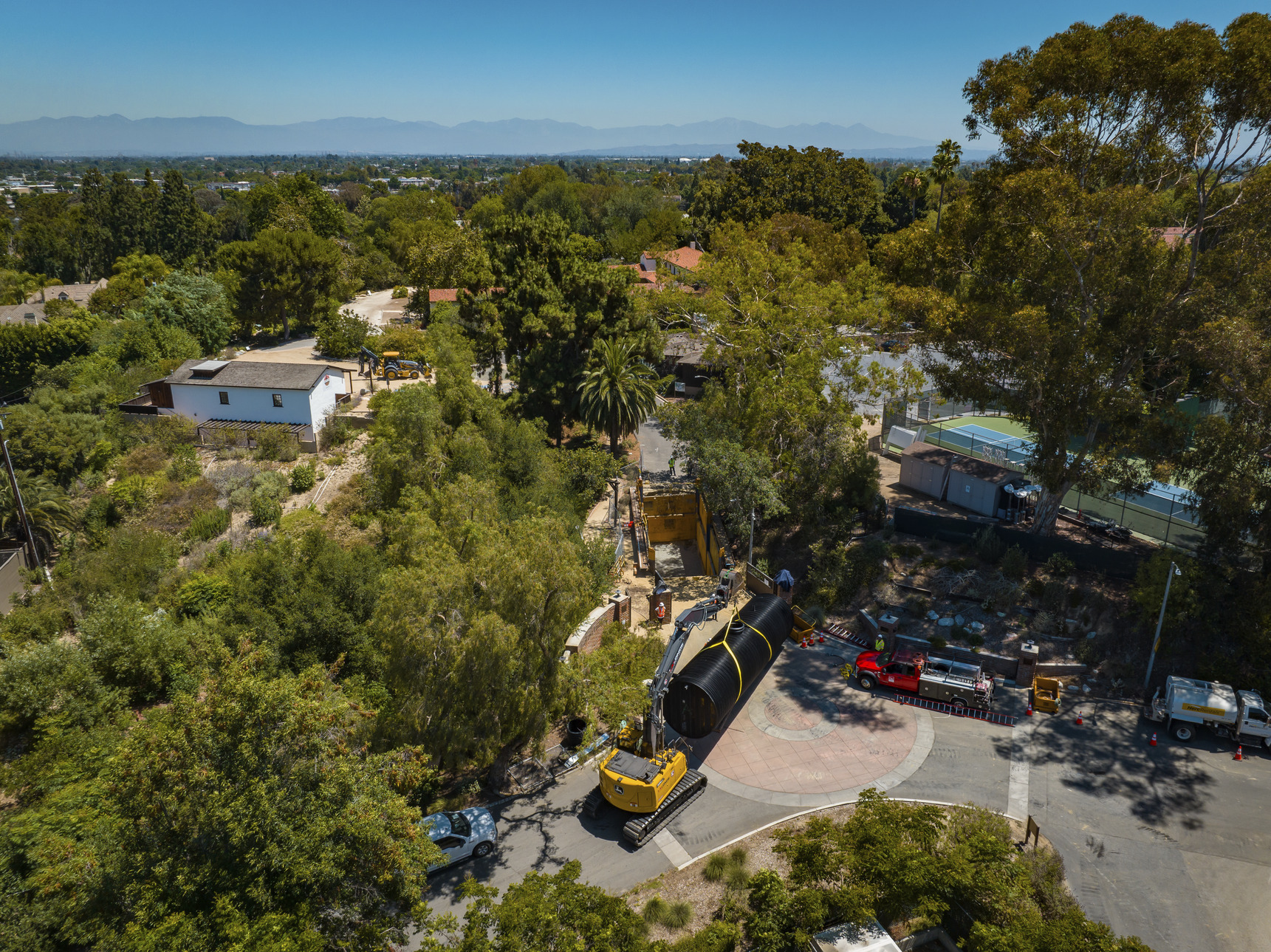
At the heart of the project is a sophisticated stormwater capture and reuse system capable of retaining and reusing up to 95 percent of the rainfall that falls on the property. Rainwater is collected through carefully integrated permeable paving and conveyed to a concealed 22,000-gallon underground cistern, where it is filtered, stored, and redistributed through a drip irrigation network that supports the Rancho’s historic gardens and mature trees. During larger storm events, excess water is directed through a series of natural drainage features that slow, filter, and infiltrate runoff before it leaves the site, dramatically reducing pollutants entering the Dominguez Gap Wetlands, the Los Angeles River, and ultimately the Pacific Ocean.
The landscape itself serves as living infrastructure. Carefully designed bioswales planted with California natives naturally cleanse stormwater while restoring habitat and enhancing biodiversity. Located throughout the visitor parking area and adjacent landscapes, these planted systems transform what would traditionally be engineered drainage facilities into beautiful ecological landscapes that celebrate California’s native environment. The planting palette not only improves stormwater performance but also provides seasonal interest, supports pollinators and wildlife, and reinforces the Rancho’s long-standing relationship with the surrounding landscape.
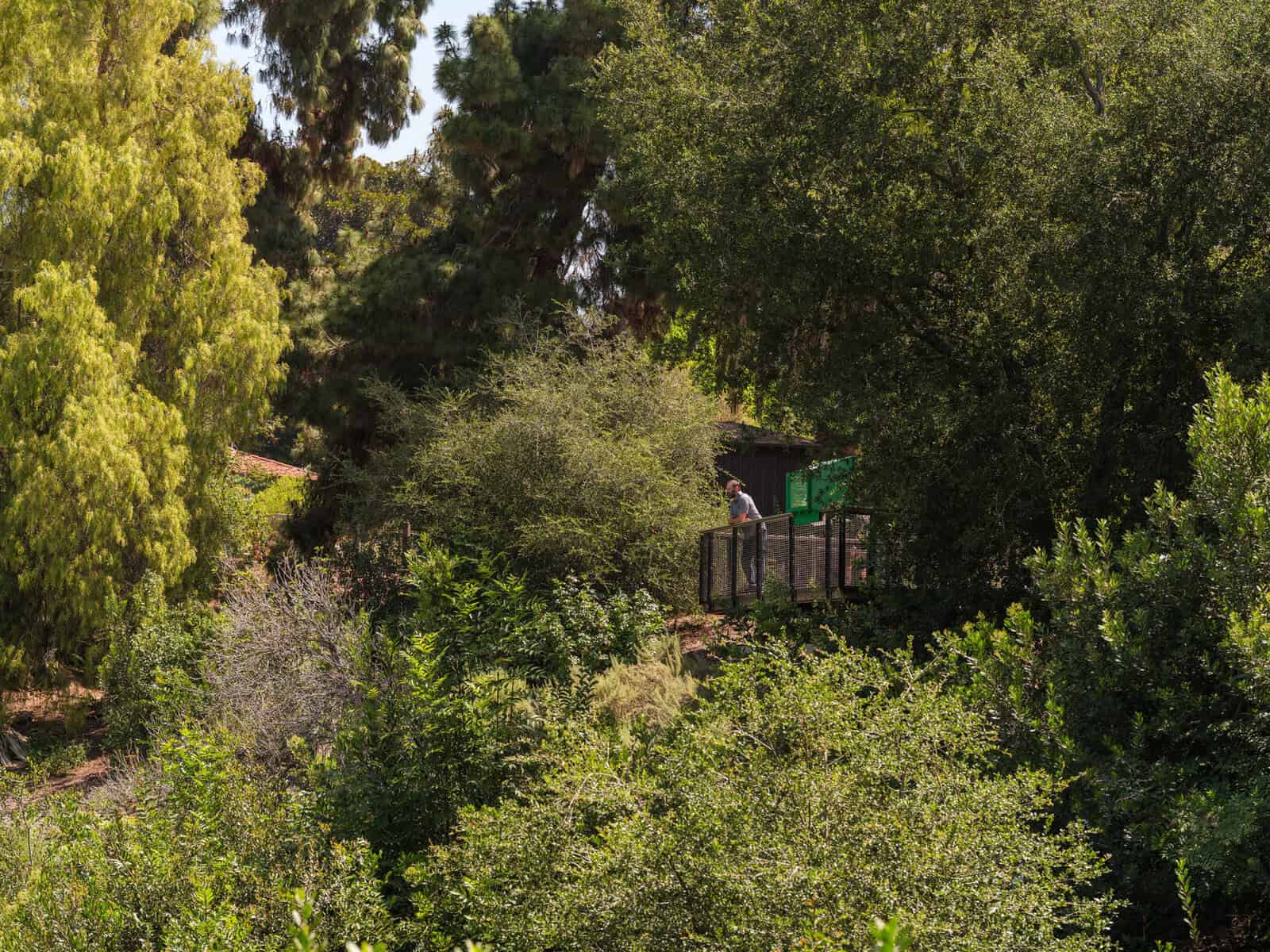
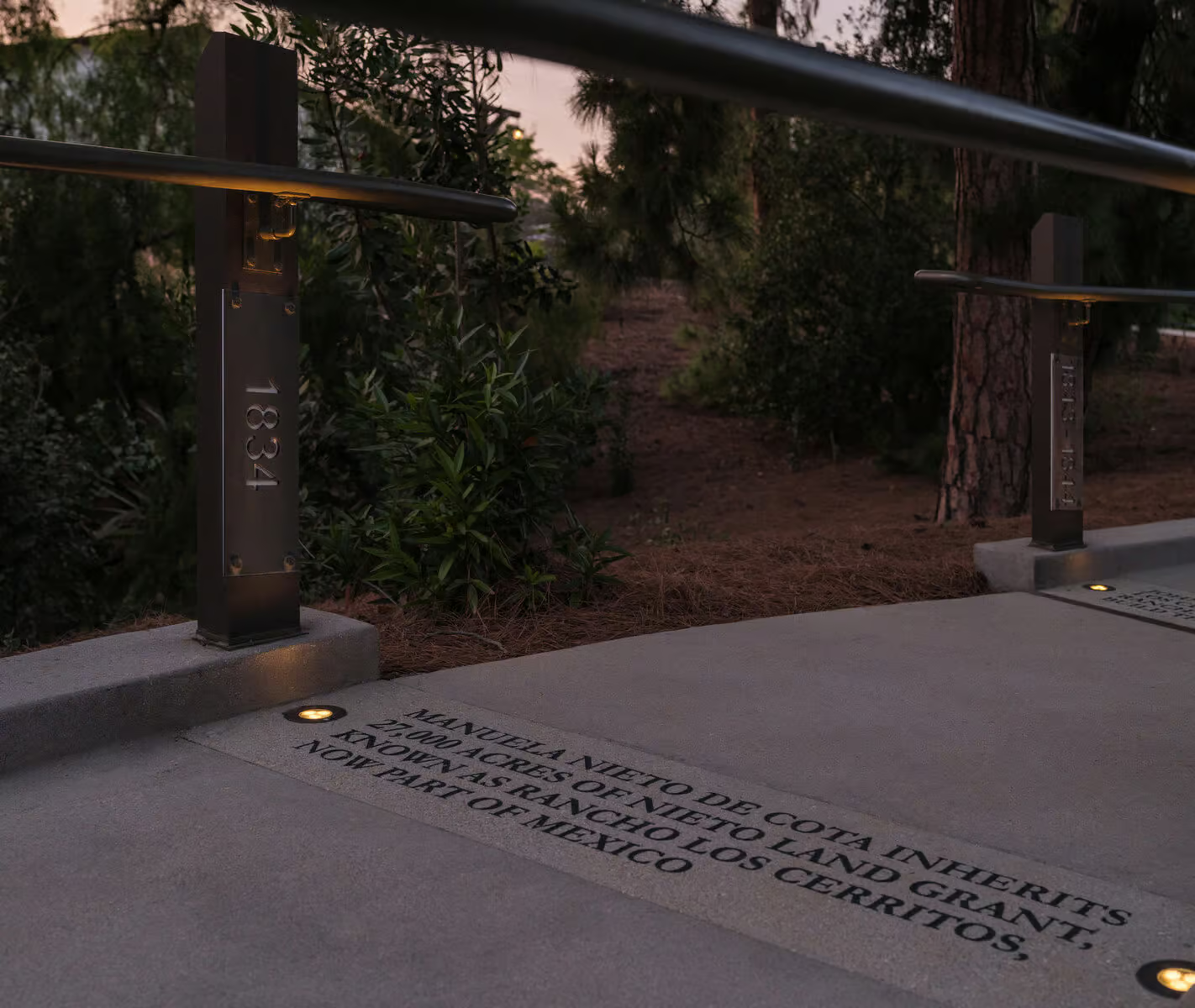
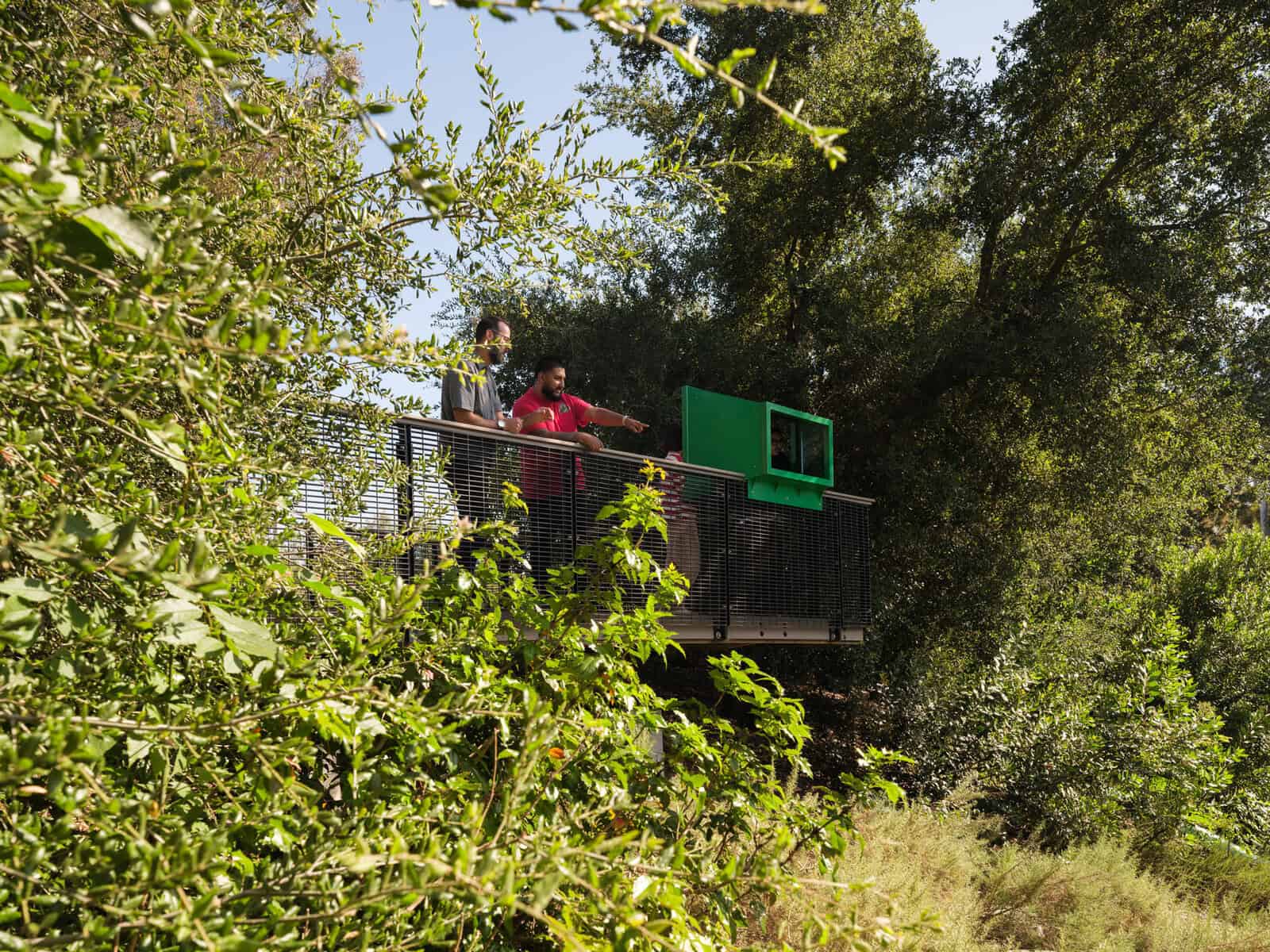
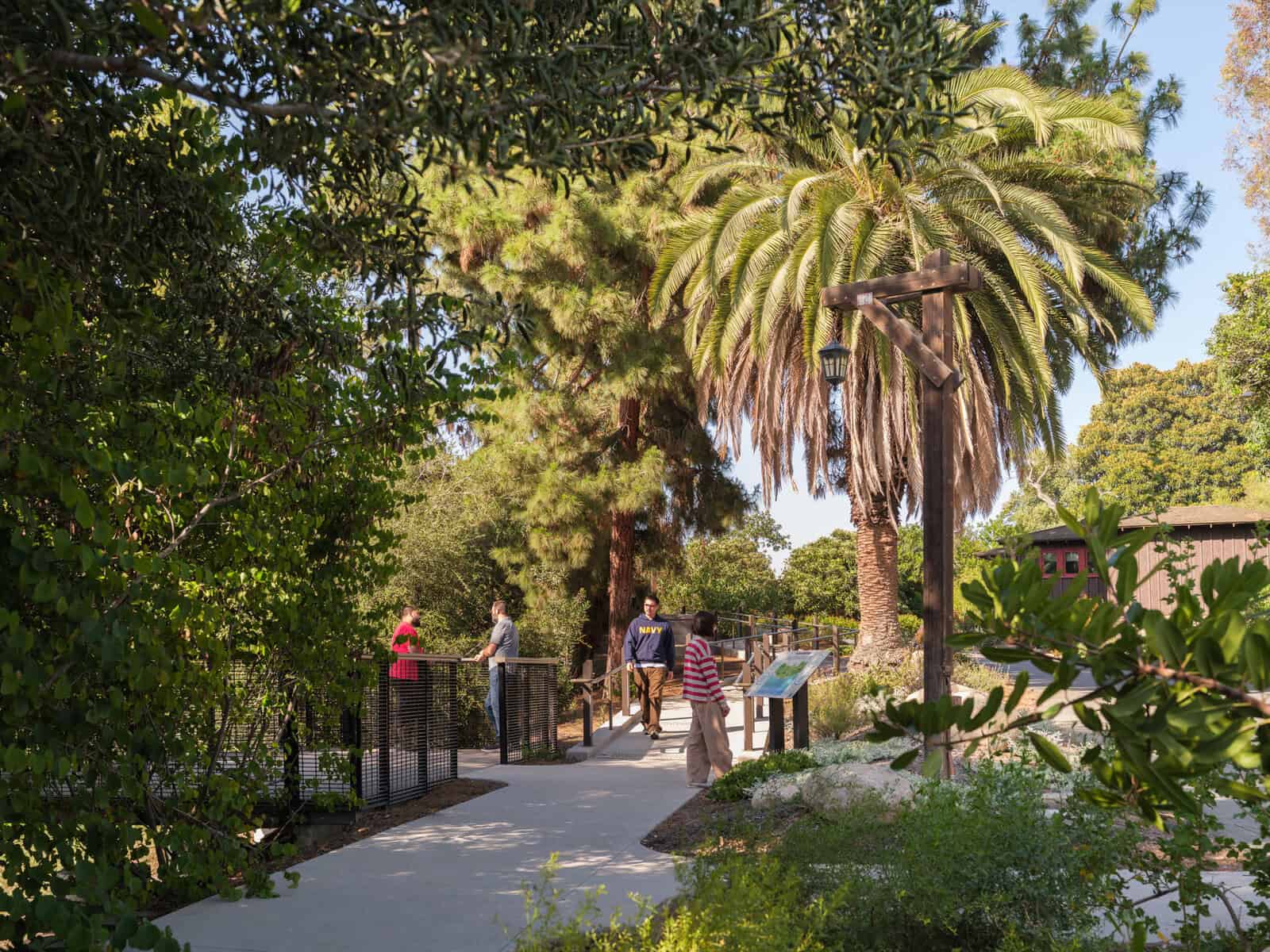
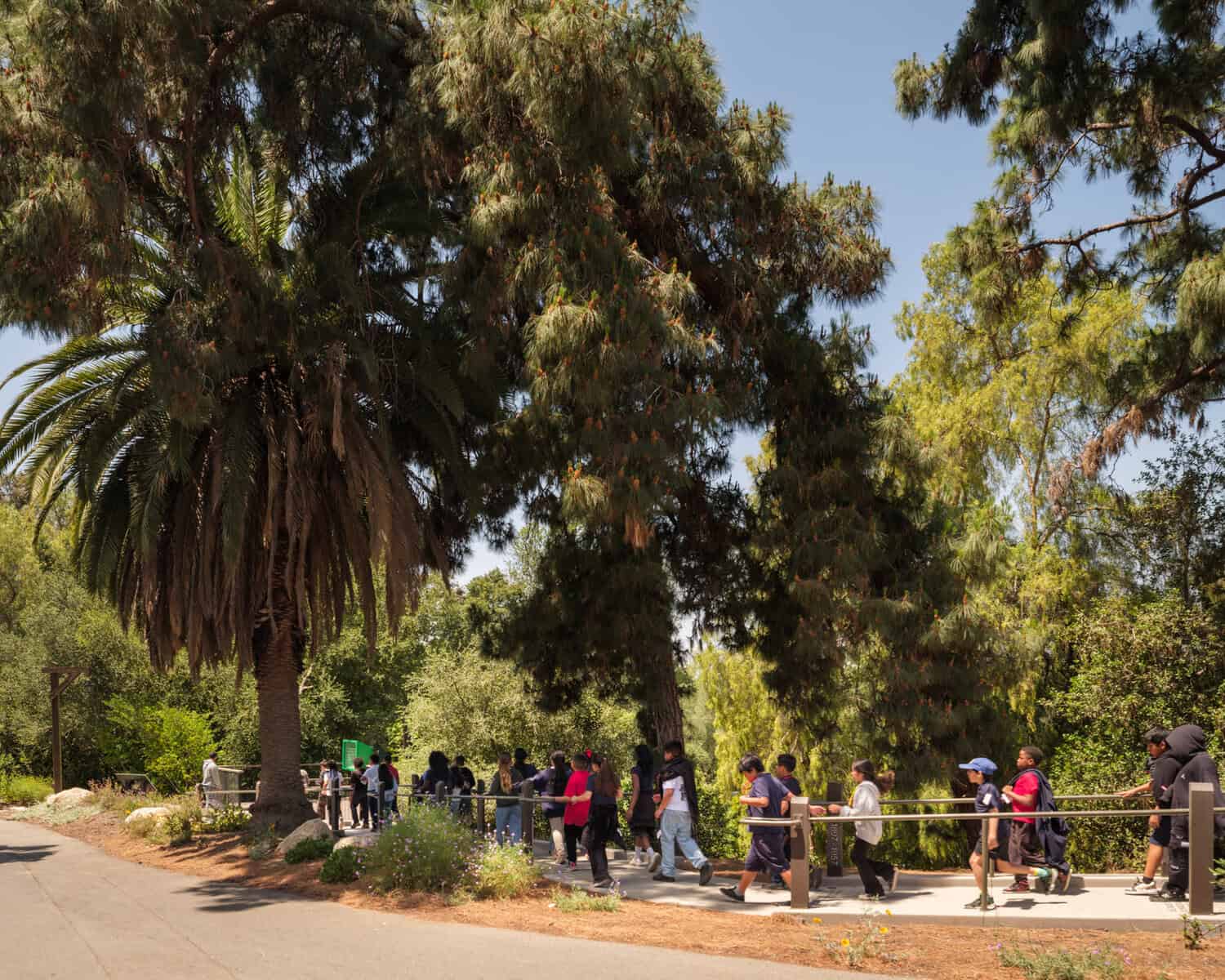
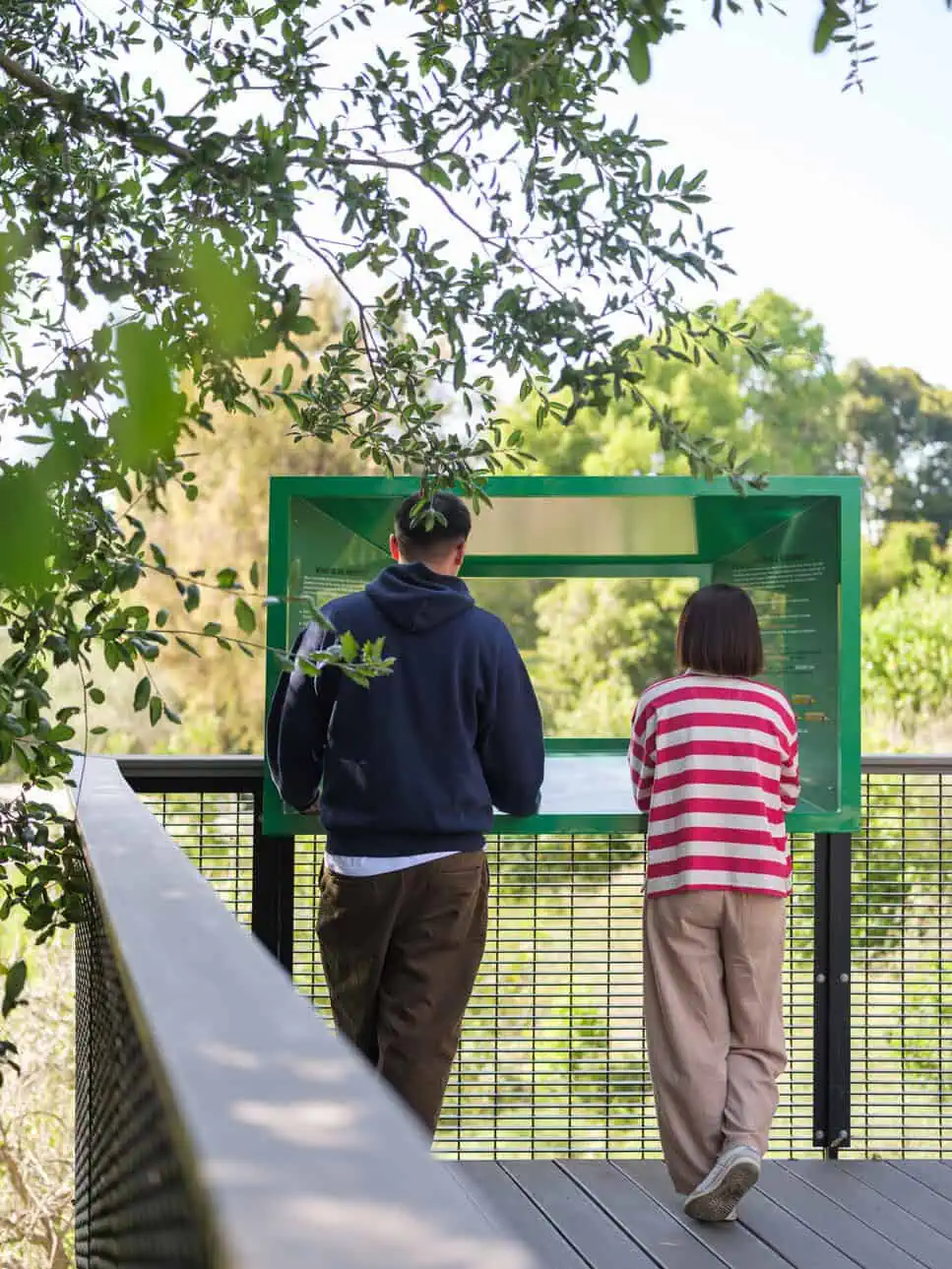
The project extends beyond environmental performance to create a sequence of immersive experiences that connect visitors to both the Rancho’s rich history and its enduring relationship with water. A universally accessible overlook deck projects over the site’s natural drainage corridor, offering expansive views of the arroyo while providing a unique vantage point to observe the natural movement, capture, and treatment of stormwater within the landscape. From the overlook, an accessible timeline walk leads visitors to the museum, tracing more than 5,000 years of history – lfrom the earliest known Indigenous stewardship of the land through the Rancho era and into a new chapter of preservation, sustainability, and innovation. Dates integrated into the handrail posts and interpretive milestones engraved into the paving transform the journey into an immersive storytelling experience, demonstrating that the landscape itself can educate, inspire, and reveal the enduring relationship between water, culture, and place.
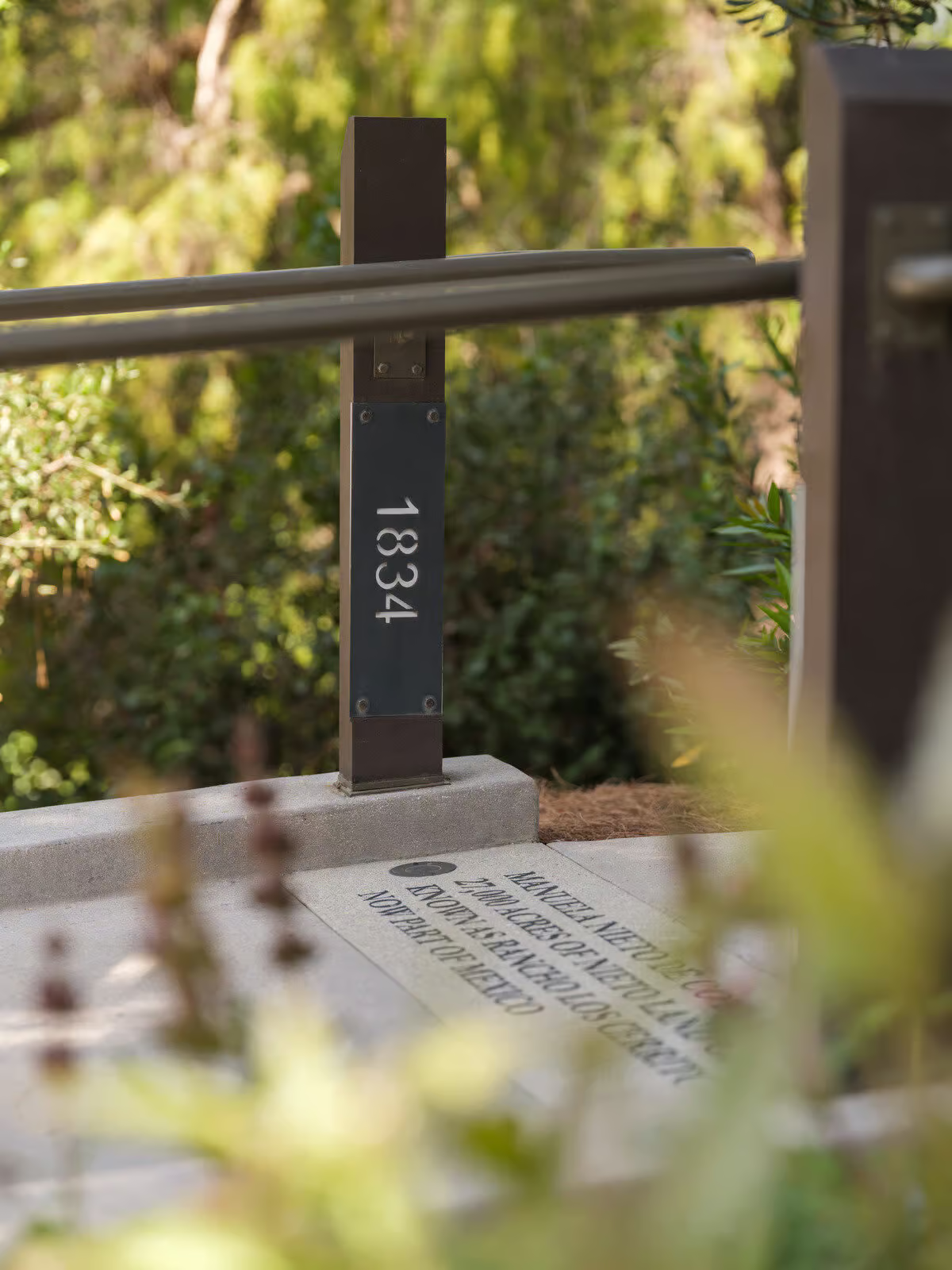
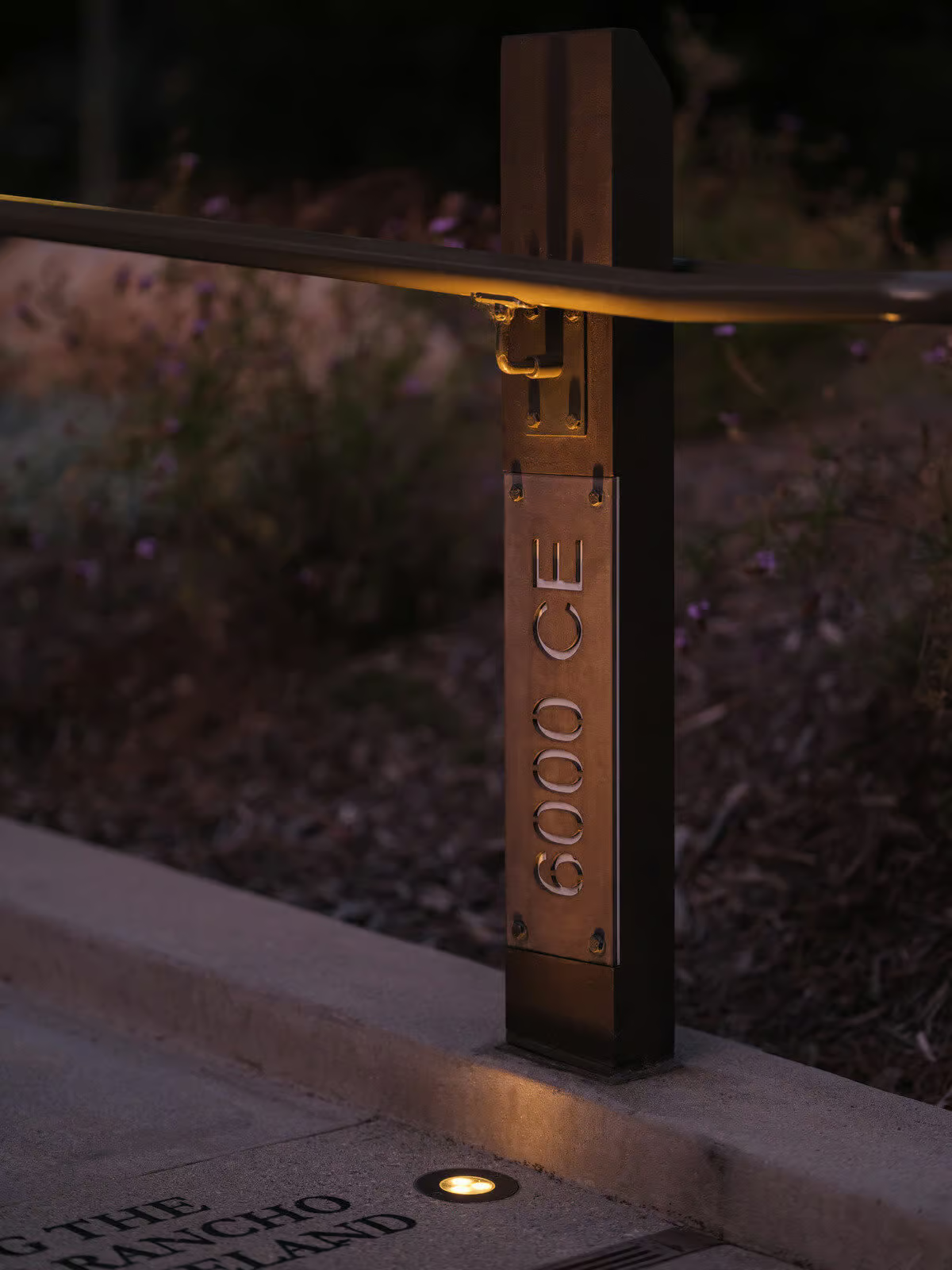
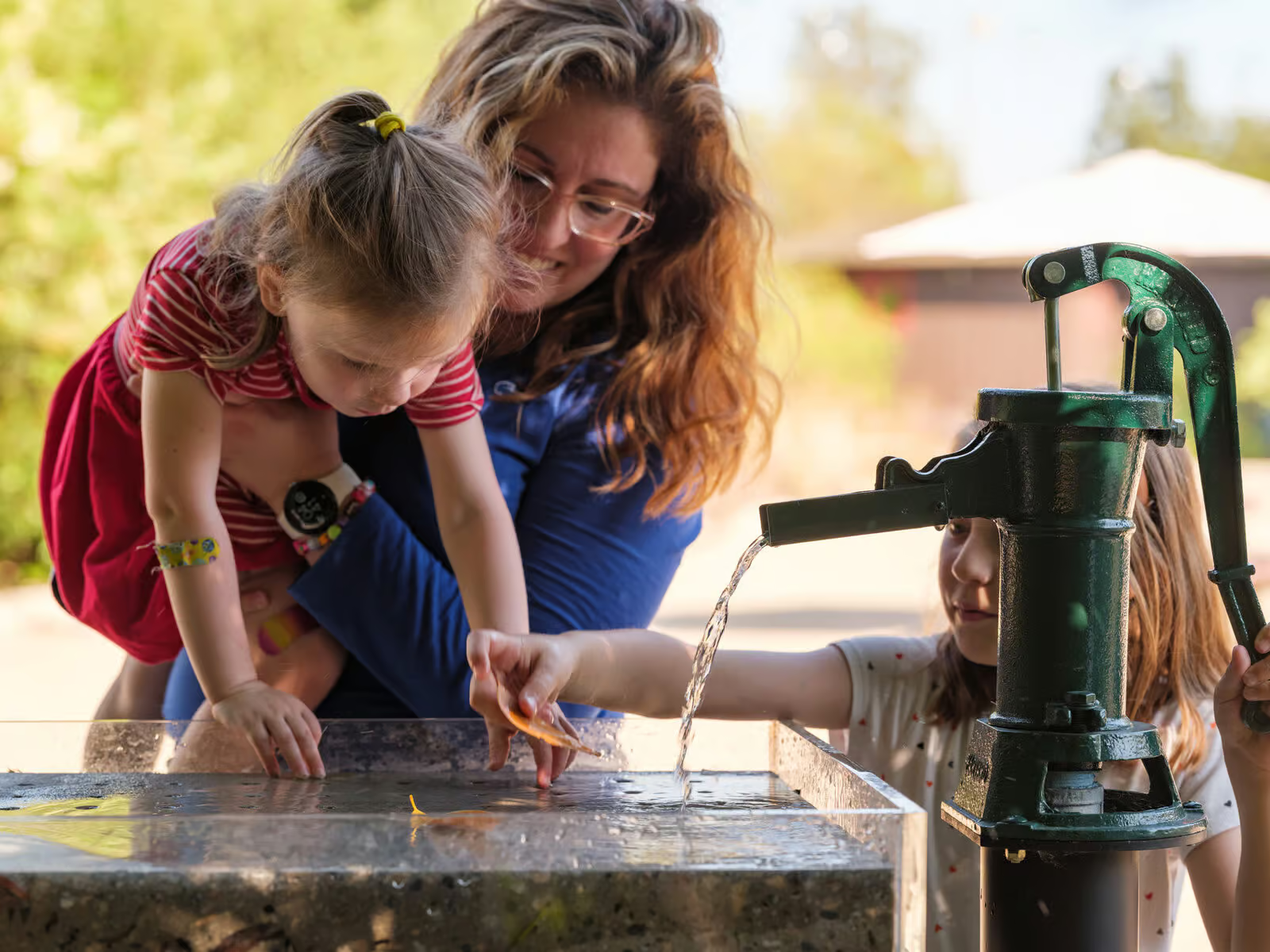
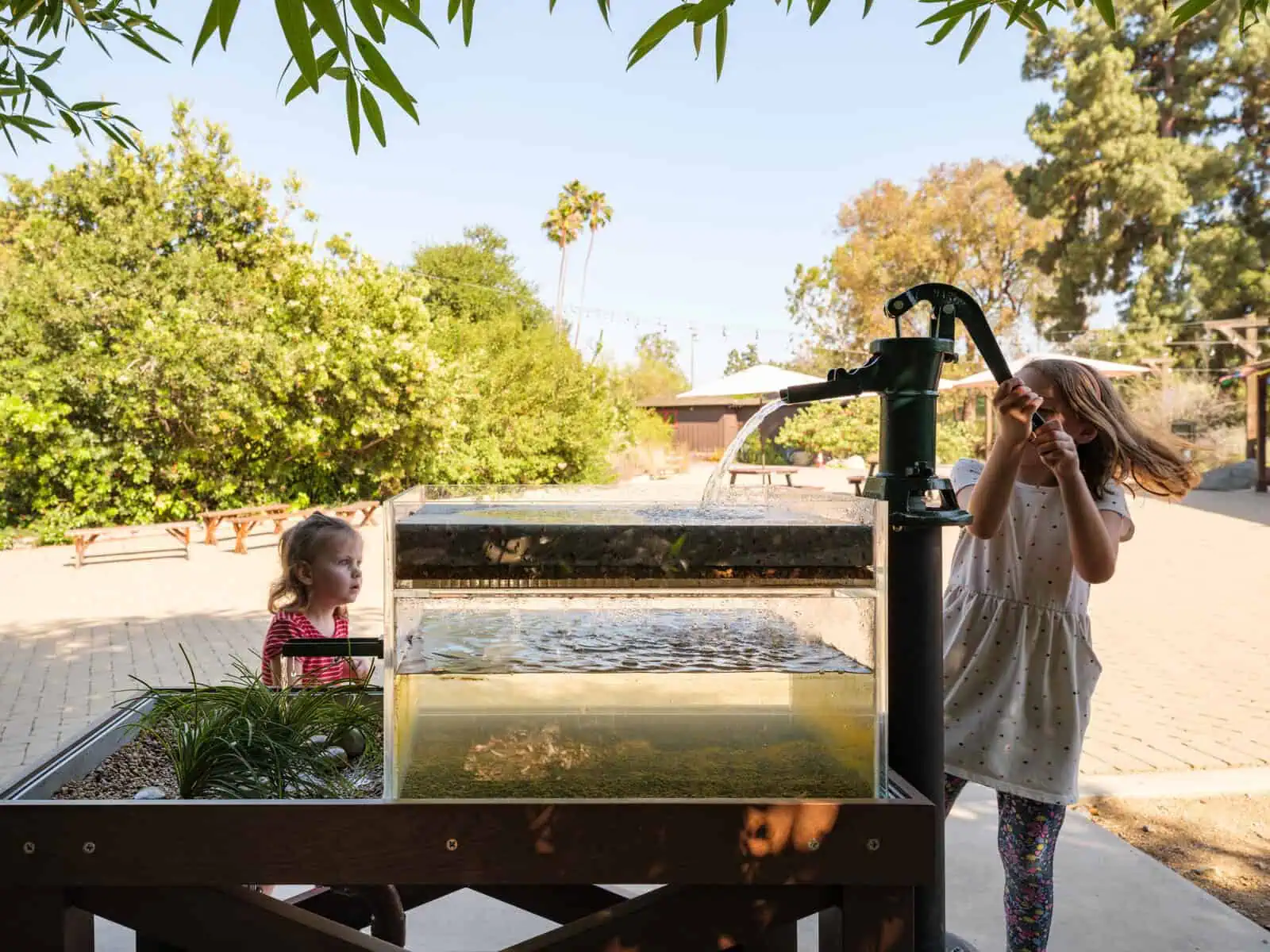
Education is fundamental to the project’s mission and is thoughtfully integrated throughout the visitor experience. Studio One Eleven developed the interpretive strategy, designed the overlook exhibit, timeline walk, and a custom hands-on interactive water model that allows children and adults to simulate how rainfall is captured, filtered, stored, and reused throughout the site. Together, these exhibits reveal the innovative stormwater system operating beneath the landscape while connecting visitors to the Rancho’s long history of water stewardship. Additional interpretive signage, produced by the Rivers and Mountains Conservancy using Studio One Eleven’s graphic design framework, expands upon these themes to create a cohesive educational experience across the site. Collectively, these interpretive elements transform largely invisible infrastructure into an engaging educational experience, reinforcing Rancho Los Cerritos’ mission as both a historic landmark and a living classroom for preservation, innovation, and environmental stewardship.
“With two methods of water reclamation – one traditional and one using state-of-the-art technology – Rancho Los Cerritos is a model for sustainable revitalization of public and private land. This stewardship and innovation allows the historic gardens at the Rancho to flourish as never before. And through public-education and access it demonstrates best practices for reclaiming water” – Alison Bruesehoff, Executive Director
Completed through multiple phases between 2022 and 2026, the approximately $4 million project was funded through a collaborative partnership that included the Port of Long Beach, Metropolitan Water District, Long Beach Water Department, and the Rivers and Mountains Conservancy. More than an infrastructure project, Looking Back to Advance Forward demonstrates how historic preservation, ecological restoration, public education, and resilient design can work together to create lasting environmental and cultural value.
By honoring centuries of water stewardship while embracing contemporary innovation, Studio One Eleven created a model that extends well beyond Rancho Los Cerritos. The project demonstrates that even our most historically significant places can become laboratories for climate resilience, proving that preservation and innovation are not opposing goals but complementary strategies for protecting our shared cultural and environmental heritage.
Rancho Los Cerritos launches $4 million project to capture, reuse 95% of rainfall
Walking Through Time Before You Even Enter: Lessons from Rancho Los Cerritos
“Not a Brick Out of Place”
Gallery
Related Projects
MOLAA Demonstration Garden
Long Beach, CA
The Oaks School
Los Angeles, CA