


Menu
Studio One Eleven’s Southern California Waterfront Projects reimagine over 400 acres of coastline as resilient, public-centered destinations that balance recreation, ecological restoration, and year-round community life, demonstrating how waterfront development can strengthen public access while integrating climate adaptation, cultural programming, and coastal resilience.
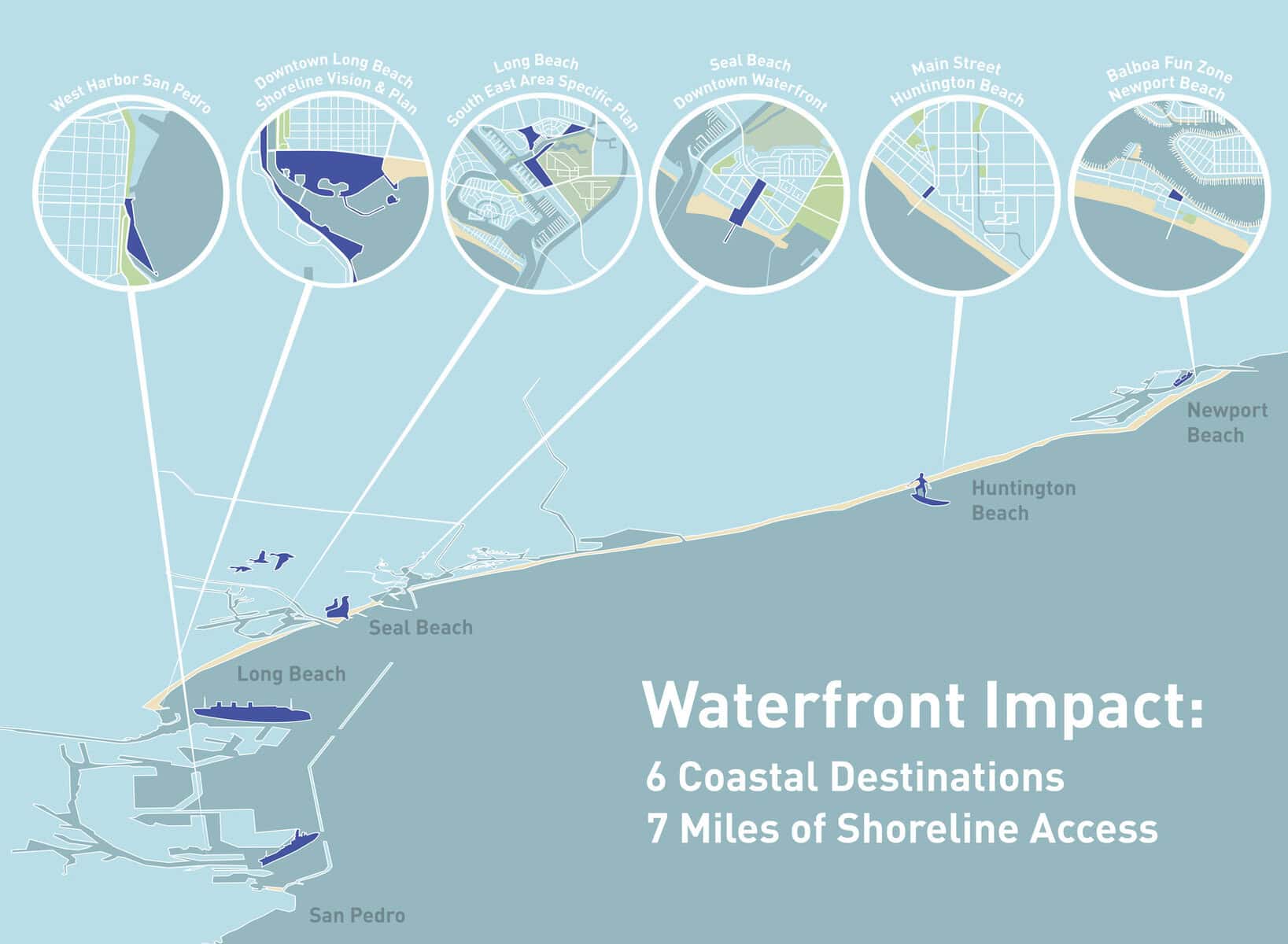
Southern California’s natural coastal identity has changed dramatically since the late 1800’s to accommodate human development including recreation and industry. During this period 75-85% of historical wetlands have been lost. In 1972 a state agency called the California Coastal Commission was established to protect, conserve, and restore the coastline and ocean. It regulates development, ensures public access to beaches, and protects coastal resources.
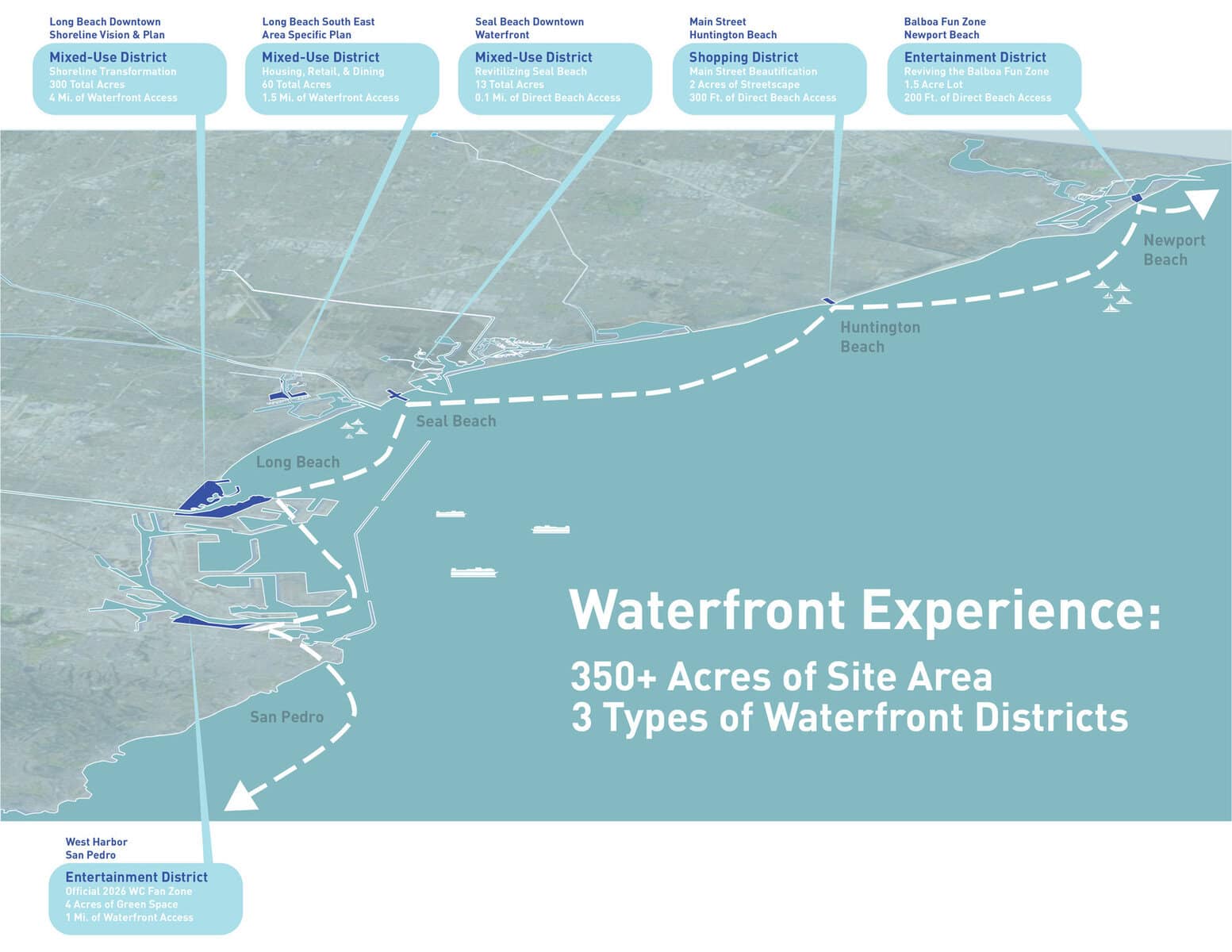
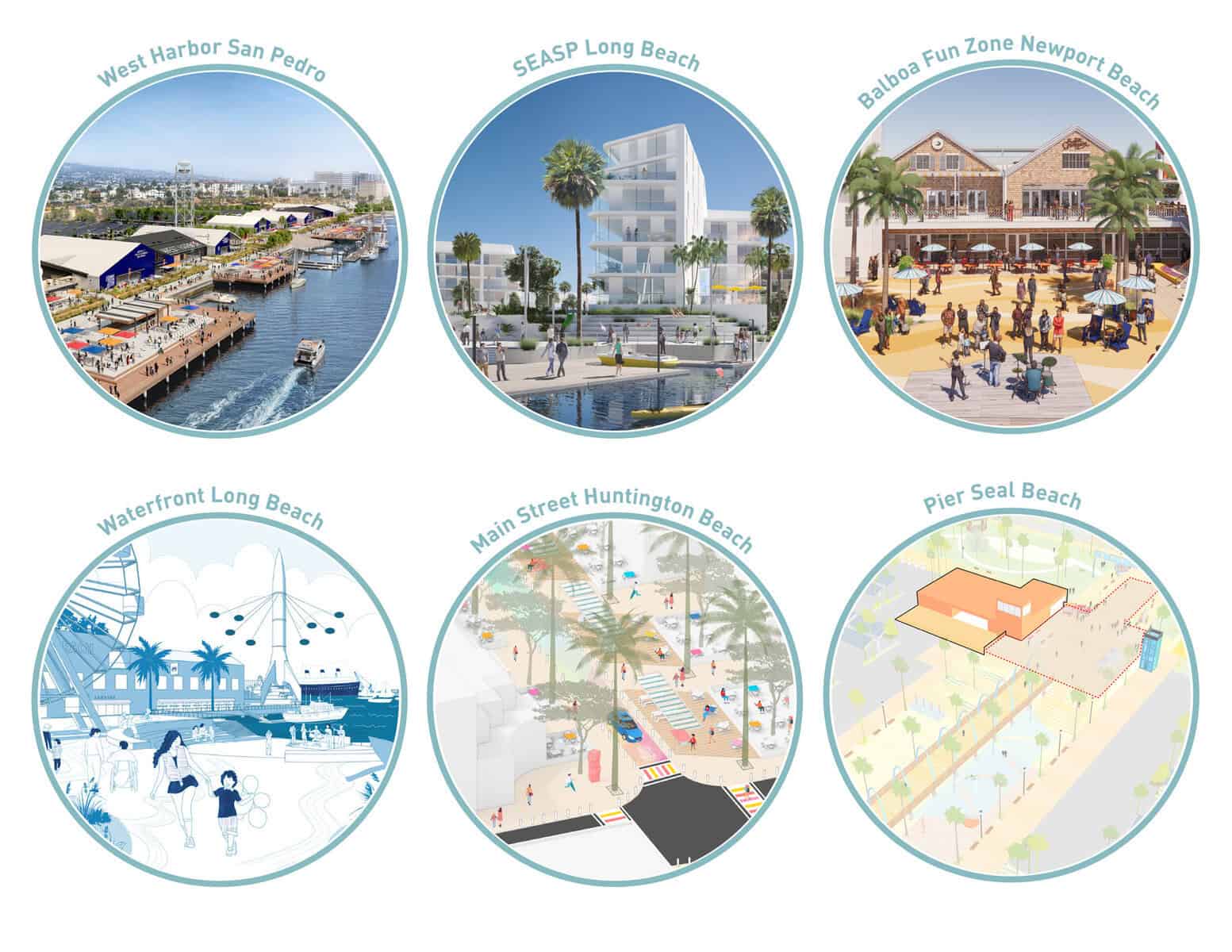
The waterfront projects Studio One Eleven works on are fundamentally about honoring public access to recreation and leisure, engaging in projects spanning over 400 acres of coastline, from the 42-acre West Harbor entertainment district in San Pedro to the 300-acre Long Beach Downtown Shoreline Vision Plan, to mixed-use revitalization at Pier Seal Beach, Fun Zone in Newport Beach, and Main Street Huntington Beach. The design challenge is not displacement of existing recreational users but rather the creation of complementary destinations — promenades, dining, cultural programming — that extend the reasons people come to the water itself.
The California Coastal Commission’s mandate to prioritize public and visitor-serving uses means that the mixed-use residential neighborhoods common to waterfront redevelopments in other parts of the country are not the norm here. That constraint brought us to a different design question: how do you build waterfronts as destinations that are active and inviting across the full week, not just weekends or during the summer season? Projects like the Long Beach Shoreline Vision Plan address this through flexible public spaces and a range of programming anchors, while West Harbor’s mix of food, entertainment, a 6,000-seat amphitheater, and four acres of park space is explicitly designed to drive visitation across seasons and times of day. The SEASP Long Beach district, at 60 acres with 1.5 miles of waterfront frontage, similarly grapples with how housing can be introduced into waterfront sites while balancing visitor-serving and restoring ecological needs.
Ecological consideration is woven into all these projects, both as a matter of environmental sensitivity and of long-term resilience. Wetland restoration offers benefits including habitats for endangered species, protecting communities from flooding, and improving water quality and are considered “blue carbon” sinks. While Southern California has the well-known image of popular beaches and an active beach culture, large parts of its coastline, especially in LA County, has also been heavily engineered — hardened edges from port infrastructure, oil extraction, flood control channels, and decades of urbanization have modified natural coastal conditions across the region. Design strategies that reintroduce soft edges, wetland buffers, and ecological corridors must do so carefully, working around substantial existing investments in infrastructure and development. Projects like the Southeast Area Specific Plan in Long Beach, and the Downtown Shoreline Vision Plan explicitly integrates wetland features as part of its sea-level rise adaptation strategy — some of the more concrete examples in the region of treating ecology not as a constraint but as a design tool for resilience.
Related Projects
Alamitos Bay Partnership
Long Beach, CA
West Harbor
Los Angeles, CA